By Jonathan Levi
October 14, 2026
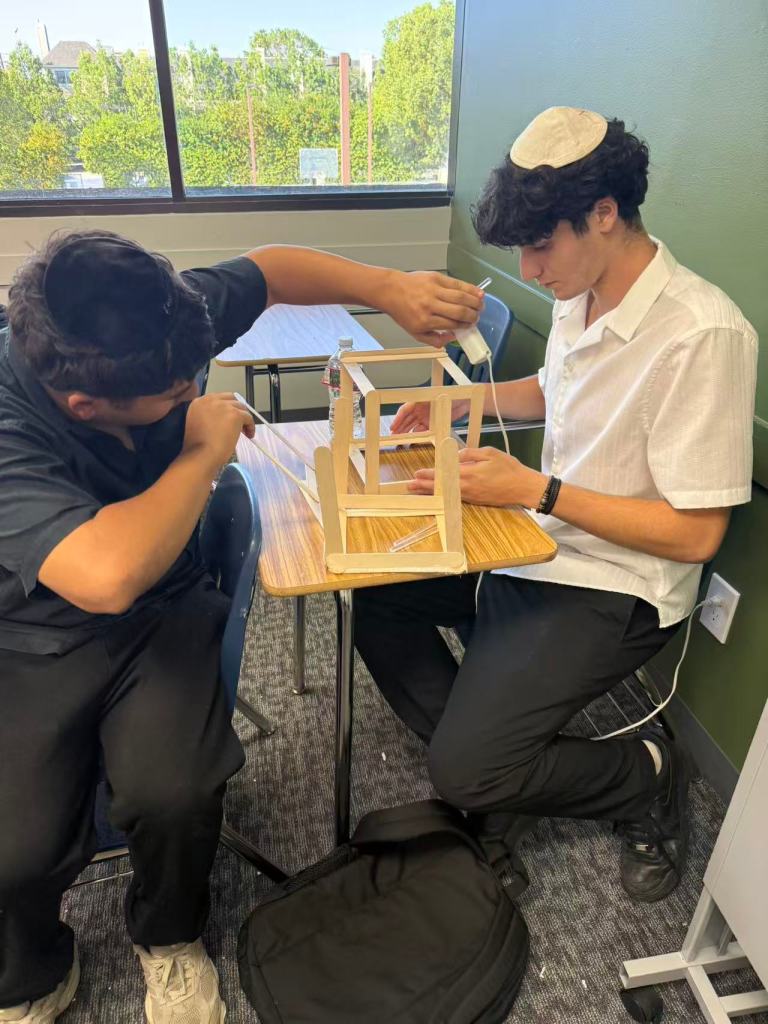
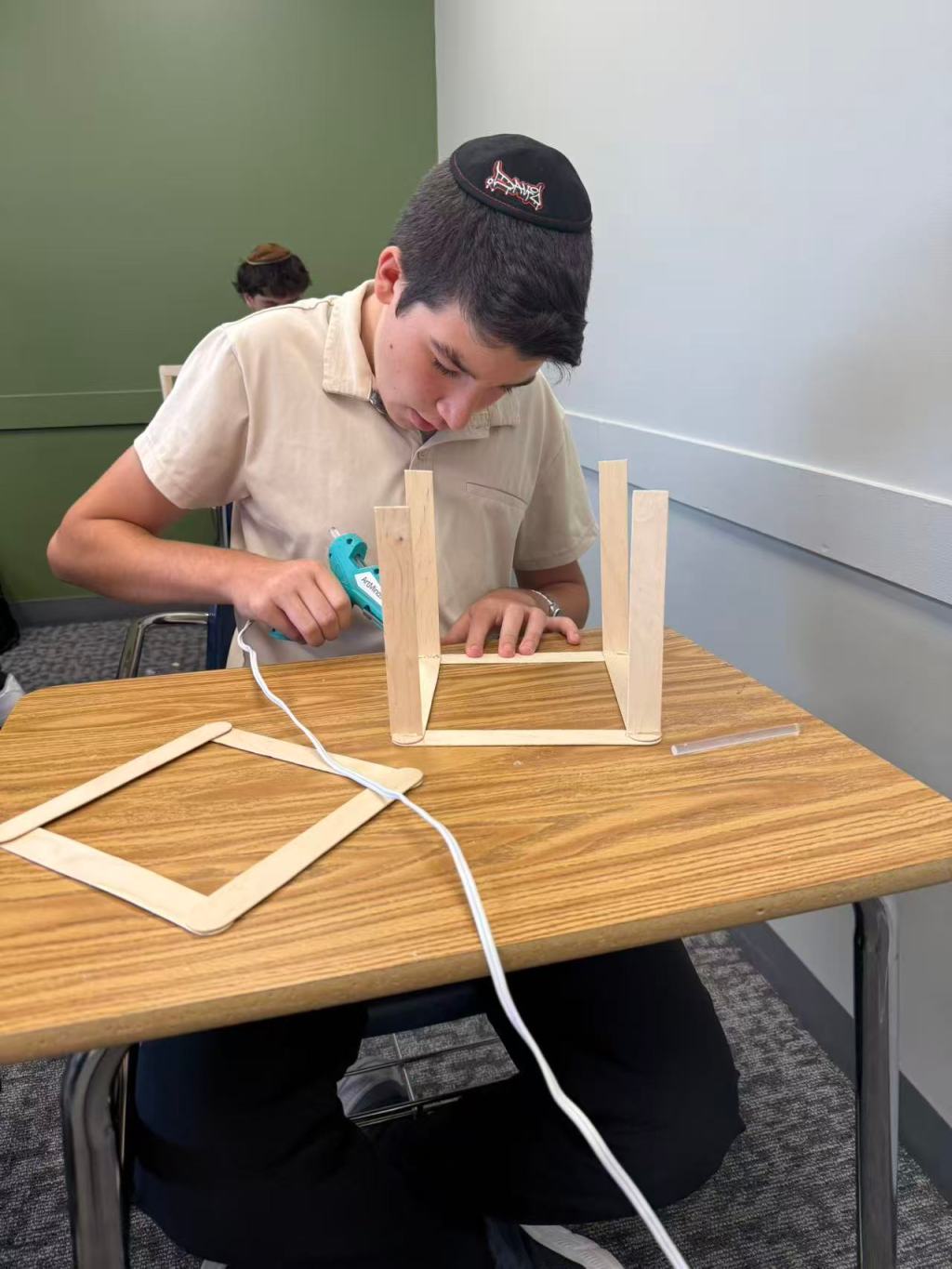
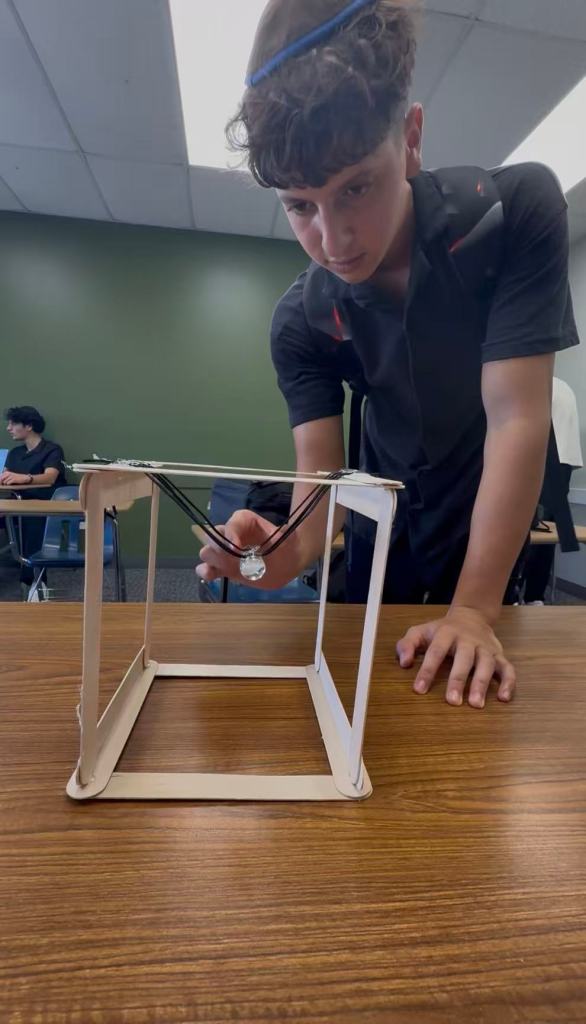
Last Thursday in Mr. Gee’s 11th grade STEM class, they explored Newton’s laws of motion by building a Newton’s Cradle model.
The objective was to help students learn how motion, momentum, and energy are transferred between objects during collisions. They applied math formulas to calculate and solve momentum, engineering skills, critical thinking, and problem solving through hand-on learning.
What is Newton’s Cradle you may be asking? Newton’s Cradle is a device with swinging spheres that demonstrates conservation of momentum and energy. It was named after Sir Isaac Newton because of its connection to his laws of motion. It was invented in 1967 by Simon Prebble. Simon Prebble was an English actor and voiceover artist.
Momentum is conserved during collisions in Newton’s Cradle. An example of Momentum is when one ball strikes, another ball moves out with equal momentum. Energy transfers from one ball to the next; Kinetic energy is observed. Energy conservation makes the balls swing nearly the same height.
Why does it stop? Because energy is lost as sound, heat, and air resistance. You can even release 5 balls but quickly stop due to energy distribution.
This experiment helps students visualize physics concepts. This experiment relates to collision sports like football, baseball, and billiards. This experiment also can help explain crash testing and material strength for Engineering applications.
There are a few misconceptions about this experiment. People think Newton’s Cradle moves forever, it doesn’t because energy is slowly lost as sound, air resistance, etc.
This project helped students understand Newton’s three laws of motion. students explored Newton’s Laws of Motion by building and testing a Newton’s Cradle model. They investigated how motion, momentum, and energy are transferred between objects during collisions.


Leave a Reply