Written by Efrayim Zaghi.
One of the weekly highlights in Valley Torah is always the amazing Shmuz that Rabbi Stulberger gives over on Fridays. This speech is refreshing and inspiring and continues to help me learn and grow in Torah by learning about the weekly Parsha. Unfortunately, this past Shmuz was the last Shmuz this year and maybe the last one for me ever, so it holds a special place in my heart.
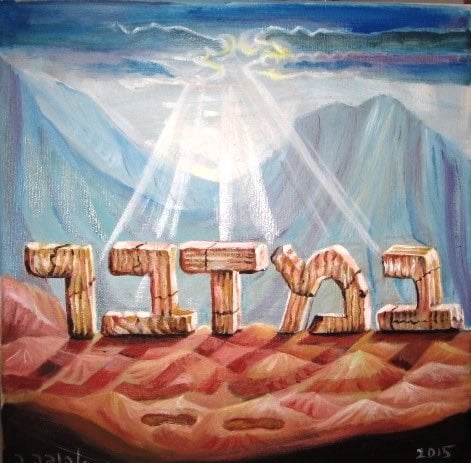
Rabbi Stulberger began by saying that Bamidbar always falls out by Shavuot. What is the connection between Shavuot and Bamidbar? One fundamental explanation of this connection is that we went to the midbar to receive the Torah. Whenever we see the word “Midbar,” Chazal tells us the dessert is connected to humility. This also connects to why Hashem chose Har Sinai as the mountain to give the Torah.
There is a connection between Torah and humility that we need to delve deeper into. The greater the chocmah-wisdom, the more humble he is. The greater we become and the more Torah we have, the more we will recognize that humility is the greatest virtue we could wish for. To the extent that Hashem himself says that if a person is a Baal Geavah (someone with a strong ego), there is no room for me to coexist in your world. The attitude that we are better, stronger, wiser, and more capable than others has to go away, and it is a repellent to absorbing other Torah values.
Humility, as a virtue, manifests in various degrees, as evidenced by our religious luminaries. Dovid and Avraham, while embodying humility, acknowledged their worth but did not consider themselves significantly superior to an ordinary person. However, Moshe, the epitome of humility, went to the extent of proclaiming his insignificance. This spectrum of humility, from self-awareness to self-effacement, offers us a nuanced understanding of this virtue.
The Torah is trying to tell us something so deep and profound: If a person wants to become great, they must recognize that no matter how great a person is, we are never better than anyone else, and we should never look down on someone else. Moshe knew he was the most outstanding leader of the Jewish people ever, but he also knew that Hashem gave him these talents and that he was not better than any ordinary person. We are judged not by how much we accomplish but by how much we can achieve with these gifts from Hashem. If someone all they can do is learn two Perakim of Mishnayot, and it takes him days and months just to get through them, Hashem doesn’t say, “Wow, two perakim is like nothing!” In Shamayim, they are opening the gates for that person, treating him like he did the entire Shas. Let’s say someone else has the potential to know the Gemorah as a whole by heart, but they only fulfill half of their potential. It is still a remarkable feat, and down here, we would congratulate him for it, but up in Heaven, the person who struggled immensely to learn two perakim is probably higher than the person who did not try as hard to understand half of the Gemorah. This concept is also reflected in parenting. A parent in Valley Torah told Rabbi Stulberger a few years back at graduation, “I just want to thank you since Valley Torah helped to humble my son.” That boy is now a great Torah scholar and many people worldwide listen to his Shiurim today.
The Torah tells us that this quality of the Midbar and humbleness are prerequisites for the Torah. The Or Hachaim famously said, “There are three aspects to Kabbalat Hatorah: the Midbar and humility, the intensity of Torah to strengthen ourselves in Torah, and finally the achdus. These ingredients lead to a result we can’t even imagine. Amazing Gedolay Hador, such as Rav Chiam Kanievsky, The Baal Shem Tov, the Chofetz Chiam, and the Babasali, just the thought of these people makes some people tremble in their shoes. But what is so unique about these people? They have the same lifespan as us; they are flesh and blood like everyone else, but what is so angelic about them? Were they just born with that quality? They are angelic because they have the Torah, the gift of the amazing Yom Tov Shavuot we are about to enter. The nature of this gift we were given could help us become the most amazing people we could ever imagine through the Torah. Torah helps us become humble and knowledgeable and allows us to see things that words cannot even describe. How many stories do we need to hear before we realize it is not them per se; it is the Torah they have imbued within themselves, the effort, energy, and time all dedicated to the Torah.
This lecturer gave a story about Rabbi Aaron Lev Shteinman, who was humble and accepted the Torah like a Midbar. Three people were sitting in his office, and this lecturer asked the first person, “Do you mind telling me what question you plan on asking the Rav? These questions lead to great stories, and I want to know more.” The man says to him, “I learn in a Kollel, and I have a shidduch for my daughter, but I just found out that to seal the deal for them to get married, I have to give the new couple 500,000 Shekalim (roughly 150,000 USD), and I simply don’t have that type of money. So I need to ask, should I sign on this commitment that I may not be able to fulfill?” The guy enters the room, tells the Rabbi about his situation, and asks, “Should I sign?” The Rabbi began to question him and asked what he was learning when he was learning, how often he learned, and how involved he was in learning, and the Rabbi looked at this kollel guy with barely a penny to his name to scrape by every week, and told him to sign and that the money will come to him. He returned, told the lecturer what happened, and said I have complete Bitachon in Hashem and that the Gadol Hador would help me.
Interestingly, the third guy in the room had a very similar question, and when he went in, the Rabbi asked, “What do you do?” He said, “I am a businessman.” Immediately, he says, “No, you can’t sign. The numbers just don’t add up.” The guy is bewildered and asks, “But Rabbi, you told the first guy who left thirty minutes ago to sign, and his amount was significantly more, and he does not make as much money as I do.” Rabbi Shteinman said, “He learns Torah, and his relationship with Hashem is different.” When we give over our lives and time to Hashem, to his Torah, the limits for what we can ask and what we will receive from Hashem are not in place. Two weeks later, the lecturer gets a phone call, and the person on the line says, “You won’t believe what just happened; you need to come here right now.” The lecturer ran over, and the man showed him an envelope.
The guy and his family and roughly 60 other families had been dealing with the German government for reperations to survive WW2. After years of haggling with the government, he gets a check for over 500,000 Shekalim. The guy goes over to Rav Shteinman and says, “Look at this letter! Your bracha came true, and I got the 500,000 shekalim!” The letter said, “The German Government officially owes this family 520,005.90 Shekalim.” The Rebbe looked at the letter and said, “It is a little bit interesting that you got that amount; I gave you a blessing for 500,000 shekalim. Why is there an extra 20,005.90 shekalim?”
The guy thought Rav Shteinman was joking, but Rav Shteinman seemed to think: “I gave him a blessing for 500,000. Why is there that extra amount?” The man goes to the bank to cash out the money and only receives 500,005.9 shekalim in his account. He goes to the teller and asks him why his 20,000 shekalim just disappeared. The teller answered that the 20,000 was the fee they had to give to a lawyer for this transaction to go through. The man then wonders why that extra 5.9 shekalim is there if he was only promised exactly 500,000 shekalim. He then calculated that the bus to the bank and the bus ride cost him exactly 5.9 shekalim. He had gained precisely 500,000 shekalim to his name, exactly like the Rav promised.
That is the power of the Torah. It doesn’t come from extraordinary powers; it comes from the Torah. That is the gift we are celebrating on this fantastic holiday of Shavuot, which makes it so that everyone can ascend to great heights. Unlike Malchut, which only comes from David, and being a Kohen, which only comes from Aharon, anybody can receive the crown of Torah, but we need to work for it. Torah is like a Midbar, and it is open to anyone worldwide. If you have the humility, the intensity in the Torah, and the Achdus, the world is open for you, and there are no limits to what you can accomplish. Let us learn from bamidbar that anything is possible with the proper humility and dedication.



 The Valley Torah Scroll
Leave a comment