Foreword
I would like to recognize that I am a high school student, and not a neurologist, so it is entirely possible that, despite the citation of my sources and the fact that I spent many weeks researching this topic, there may be factual errors in this article. If this is the case, I sincerely apologize; additionally, I ask that if you find any such errors, please leave a comment on this post, and I will revise the article to match the standards of excellence we have here at the VT Scroll.
—
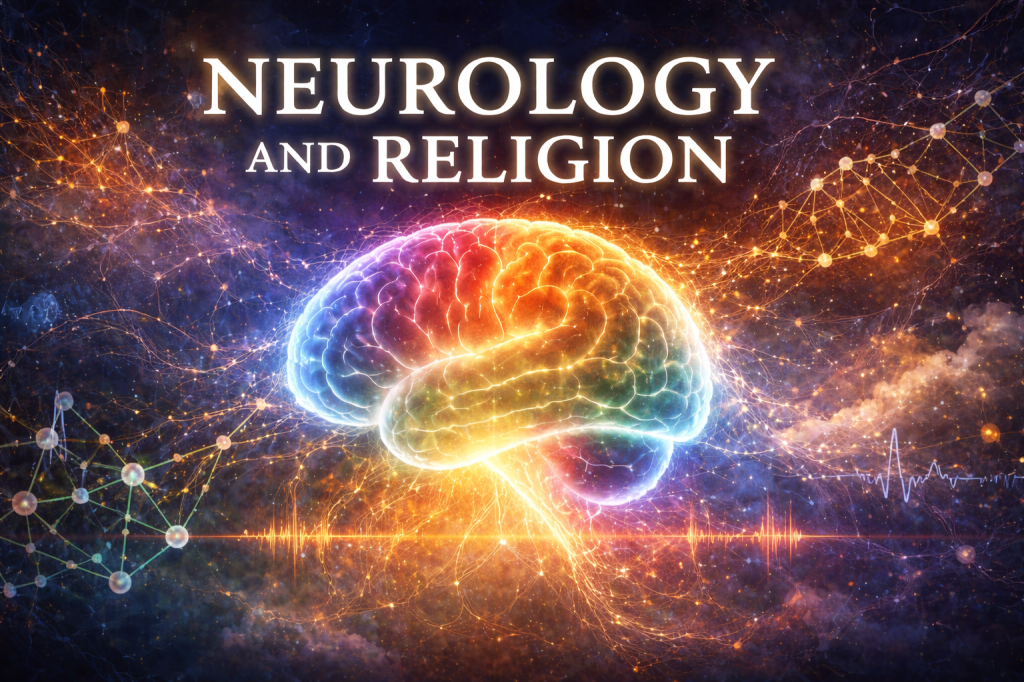
For most of human history, neurology, like most modern medical disciplines, did not exist as a distinct field. Although ancient physicians such as Hippocrates and Galen wrote about the brain, a systematic scientific study of neural structure and function did not develop until much later. The term neurology itself was coined relatively recently, by Thomas Willis in 1664 in Cerebri Anatome. This absence of information left a large chasm in our understanding of how we operate as humans. Some filled this gap with supernatural explanations (e.g., the philosophical theory of “God of the Gaps” ), while others acknowledged their ignorance. I will examine how the organization and function of the brain affects the neurological phenomena that have historically been interpreted as religious or supernatural.
Let’s start with a major part of the brain. The cerebral cortex contains four lobes, each associated with dominant, but not exclusive, functions. The frontal lobe is heavily involved in executive control, planning, personality expression, and reasoning. The parietal lobe integrates sensory input and spatial awareness. The temporal lobe plays a big role in our short- and long-term memory, language, and emotional processing. The occipital lobe primarily processes visual information. Note that while these associations are well established, modern neuroscience emphasizes that cognition (the acquiring of knowledge) arises from distributed neural networks, not isolated compartments. Use this paragraph as a reference in case you forget the particular function of each lobe.
The distinctions between the four lobes provide context for interpreting historical reports of religious experiences.
An illustrative case is Abraham Abulafia (13th century), a Spanish Kabbalist who developed meditative techniques that were intended to induce prophetic states. Using controlled breathing, the repetition of divine names, and intense concentration (kavanah), he reported overwhelming spiritual experiences such as hearing inner voices, feeling consumed by divine presence, and believing he had accessed prophecy. To him and his followers, these were authentic revelations. A similar pattern appears in the writings of Isaac of Acre, who described intense illumination and emotional certainty during contemplative states. While medieval mystics interpreted such experiences as divine influx, contemporary neuroscience suggests they may arise from interactions between temporal-lobe processing, limbic activation, and higher-order cortical interpretation.
Modern neuroscience offers a different framework. Norman Geschwind observed that some patients with temporal-lobe epilepsy displayed hyper-religiosity and intensified moral preoccupation, suggesting a link between temporal-lobe irregularities and altered religious behavior. V. S. Ramachandran found that certain individuals with temporal-lobe sensitivity show heightened autonomic responses to religious symbols, indicating amplified emotional salience. Michael Persinger reported that weak magnetic stimulation of the temporal lobes could induce a “sensed presence” in some participants, though later replication attempts yielded mixed results. Andrew Newberg’s brain-imaging research further demonstrated that prayer and meditation consistently activate specific neural circuits across traditions, revealing common neural correlates of spiritual experience.
Next, the limbic system, which includes the amygdala, hippocampus, and hypothalamus, balances our emotions, memory, and homeostasis*. The prophet Ezekiel describes overwhelming visions, severe fear, paralysis, and trance-like states. While Ezekiel attributed these experiences to God, neuroscience suggests these experiences can arise from limbic activity. His awe, fear, and emotional certainty in the revelation correlate with heightened amygdala production and increased hippocampal activation. Joseph LeDoux and Andrew Newberg demonstrated that rapid emotional processing can contribute to the immediacy and conviction felt in such mystical experiences, though higher-level thinking remains necessary to give those experiences meaning and structure. However, rituals such as fasting or other forms of sensory deprivation can further amplify neural responses, with religious narratives imposed afterward.
Another example of visceral emotions perceived as divine are King Saul’s experiences of mood collapse, terror, and paralysis were interpreted as possession by an “evil spirit” (ruach ra’ah). This has been interpreted by some modern scholars as possible mood or affective disturbances; if framed neurologically, such symptoms would more plausibly involve limbic and cortical systems associated with emotion and regulation.
Finally, strong emotional states can influence motor control and bodily stability through interactions between limbic, autonomic, and motor systems. Biblical accounts often describe individuals collapsing or losing strength “before God” (e.g., Daniel 8:17–18; Ezekiel 3:23). Neurologically, such phenomena may resemble vasovagal responses, stress-induced motor inhibition, or overwhelming autonomic activation rather than isolated cerebellar dysfunction. Sudden collapse, tremors, or freezing can therefore be neurologically real while culturally interpreted as divine intervention.
Still, identifying the neurological mechanisms underlying spiritual experience does not, by itself, adjudicate the truth of any metaphysical experiences or claims. Rather, it simply demonstrates that such states are mediated through biological processes.
Footnotes
*the body’s ability to maintain a stable, balanced internal environment, keeping conditions “just right” for survival and proper function. For example, the body’s ability to regulate blood sugar despite eating a lot of candy.
Works Cited
Geschwind, Norman. Disorders of Complex Visual–Spatial Perception in Patients with Temporal Lobe Lesions. Neurology, vol. 29, no. 11, 1979, pp. 1503–1512.
Geschwind, Norman, and Albert M. Galaburda. “Cerebral Lateralization: Biological Mechanisms, Associations, and Pathology: I. A Hypothesis and a Program for Research.” Archives of Neurology, vol. 42, no. 5, 1985, pp. 428–459.
Persinger, Michael A. “Religious and Mystical Experiences as Artifacts of Temporal Lobe Function: A General Hypothesis.” Perceptual and Motor Skills, vol. 57, no. 3, 1983, pp. 1255–1262.
Persinger, Michael A. “The Neuropsychiatry of Paranormal Experiences.” Journal of Neuropsychiatry and Clinical Neurosciences, vol. 13, no. 2, 2001, pp. 222–232.
Ramachandran, V. S., and Sandra Blakeslee. Phantoms in the Brain: Probing the Mysteries of the Human Mind. William Morrow, 1998.
Newberg, Andrew B., and Eugene G. d’Aquili. Why God Won’t Go Away: Brain Science and the Biology of Belief. Ballantine Books, 2000.
Newberg, Andrew B., Eugene G. d’Aquili, and Vince Rause. “Mystical Experiences and Religious Practices: The Neural Correlates of Religious and Spiritual Experiences.” Journal of Neuropsychiatry and Clinical Neurosciences, vol. 13, no. 4, 2001, pp. 641–654.
LeDoux, Joseph. The Emotional Brain: The Mysterious Underpinnings of Emotional Life. Simon & Schuster, 1996.
LeDoux, Joseph. “Emotion, Memory, and the Brain.” Scientific American, vol. 273, no. 6, 1995, pp. 50–57.
Newberg, Andrew B., Eugene G. d’Aquili, and Vince Rause. Why God Won’t Go Away: Brain Science and the Biology of Belief. Ballantine Books, 2001.
Newberg, Andrew B., and Mark Robert Waldman. How God Changes Your Brain: Breakthrough Findings from a Leading Neuroscientist. Ballantine Books, 2009.
Sacks, Oliver. Awakenings. Vintage Books, 1990.
Damasio, Antonio R. Descartes’ Error: Emotion, Reason, and the Human Brain. Putnam, 1994.
Newberg, Andrew B., Eugene G. d’Aquili, and Vince Rause. Why God Won’t Go Away: Brain Science and the Biology of Belief. Ballantine Books, 2001.Newberg, Andrew B., and Mark Robert Waldman. How God Changes Your Brain: Breakthrough

 The Valley Torah Scroll
Leave a comment