
Written by Jonah Halpern
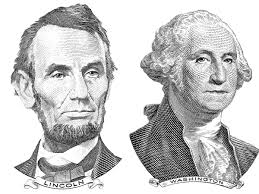
Who was the Best U.S. President – Washington or Lincoln?
In this newsletter, I have addressed politics, economics, and the environment (check me out here!), but I haven’t quite executed a piece like this. In this article, I will aim to address a constant back-and-forth argument that has been debated for decades without a definitive right or wrong answer. This debate centers around a major question that I will aim to resolve:
Who was the greater president – Washington or Lincoln?
Many believe that President George Washington was the best, primarily because he established the framework for the presidency; namely, he made the tough decision to resign after a mere two terms, a decision that rejected dictatorship and embraced democracy. Moreover, Washington’s military service is often highlighted; his role as Commander in Chief of the Continental Army during the American Revolutionary War may have single-handedly led the American troops to victory against the British. Additionally, he assembled quite the cabinet for himself, with the likes of Thomas Jefferson as Secretary of State and Alexander Hamilton as Secretary of the Treasury. By the same token, he kept the U.S. out of European wars, played a key role in establishing the First Bank of the United States, and oversaw the ratification of the Bill of Rights.
The tricky side of the argument, which often sparks the most contention, is the fact that President Abraham Lincoln boasts an equally impressive résumé. He preserved the Union during the Civil War, issued the Emancipation Proclamation, passed the Homestead Act, and delivered the iconic Gettysburg Address. In addition to his political achievements, Lincoln boasted a remarkable military record. As Commander-in-Chief, he appointed Ulysses S. Grant, who played a pivotal role in securing victory for the Union in the Civil War and later became a future President as well. From an economic standpoint, Lincoln championed the Transcontinental Railroad, which linked the eastern and western parts of the U.S. and fueled expansion. He promoted industrialization and modernization, issued a national currency, and established our national banking system. Last but certainly not least, Lincoln shaped the Republican Party’s platform by staunchly opposing slavery.
After outlining the highlights of both presidencies, it’s clear that Washington and Lincoln were incredibly accomplished and evenly matched in their contributions to our nation, but this leaves me scrambling to answer yet another question:
How could anyone possibly and reasonably choose between the two Presidents?
Those who argue in favor of Lincoln might suggest that his assassination granted him a heightened sense of recognition and appreciation, potentially making him the “larger icon”. Conversely, the opposing side would argue that this recognition was unearned, as merely being assassinated is not an accolade. While these are both fair points, they ultimately land us back in our dismal spot of irresolution.
Even so, I believe that I have finally arrived at a resolution for this argument, which, paradoxically, is that there can be no resolution to this debate, specifically, on an objective level. Subjectively, one may prefer Washington while the other prefers Lincoln, which is all well and good, except that it has no pertinence to this article.
Perhaps the better question isn’t who was greater, but rather, how do we measure greatness – do we define it by foundational impact, like Washington’s presidency, or by transformational leadership, like Lincoln’s?
The way we judge Washington and Lincoln depends largely on the particular time period we are discussing. In one era, the populace might require a strong foundational leader, while in another, they might desire unity and justice more. Likewise, our perception of what defines true greatness evolves with us. Hence, the ultimate takeaway is this: We, the People, need different leaders at the helm depending on the era we live in and the circumstances that define it (as I mentioned in the first paragraph, there are no right or wrong answers for this particular debate). Ergo, I have reached a conclusion, which is the following:
The best President—or any leader, for that matter—is the one who fits the requirements in their respective time period.



 The Valley Torah Scroll
Leave a comment